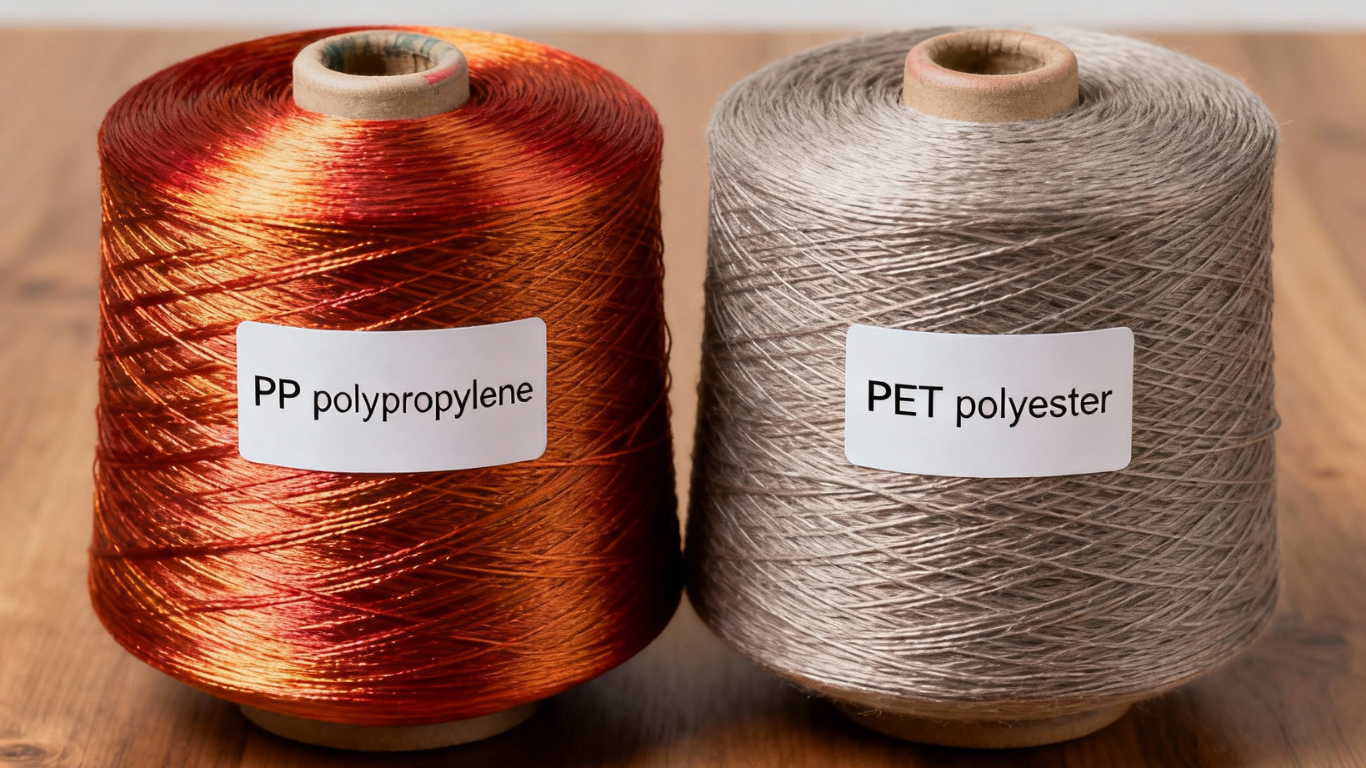
Understanding the fundamental differences between PP and PET yarns is crucial for carpet manufacturers seeking optimal performance and value.
Chemical Structure Differences:
PP (Polypropylene) – Olefin Family
- Molecular Structure: Simple hydrocarbon chain (C₃H₆)ₙ
- Bond Type: Single C-C bonds with methyl groups
- Density: 0.90-0.91 g/cm³ (lighter than water)
- Glass Transition: -10°C to -23°C
PET (Polyethylene Terephthalate) – Polyester Family
- Molecular Structure: Complex ester linkages with benzene rings
- Bond Type: Ester bonds with aromatic rings
- Density: 1.38-1.41 g/cm³ (heavier)
- Glass Transition: 70-80°C
Why PP is Superior for Carpet Applications:
1. Superior Moisture Resistance
PP Advantage:
- Hydrophobic by Nature: <0.01% moisture absorption
- No Ester Bonds: Cannot hydrolyze in wet conditions
- Stain Resistance: Liquids cannot penetrate fiber structure
- Faster Drying: Water beads off surface
PET Limitation:
- Hydrophilic Properties: 0.4-0.8% moisture absorption
- Ester Bond Vulnerability: Degrades in alkaline conditions
- Stain Susceptibility: Polar dyes can bond to PET structure
2. Enhanced Chemical Resistance
PP Advantage:
- Inert to Most Chemicals: Resists acids, alkalis, organic solvents
- No Aromatic Rings: Less reactive molecular structure
- Cleaning Chemical Compatibility: Unaffected by carpet cleaners
- Long-term Stability: No chemical degradation over time
PET Limitation:
- Chemical Sensitivity: Degraded by strong alkalis and acids
- Ester Hydrolysis: Breaks down in extreme pH conditions
- Cleaning Challenges: Limited chemical cleaning options
3. Superior UV Stability
PP Advantage:
- Solution-Dyed Available: Color integrated during production
- No Chromophoric Groups: Molecular structure resists UV breakdown
- Outdoor Applications: Suitable for high-UV environments
- Color Fastness: Maintains appearance for decades
PET Limitation:
- UV Sensitivity: Aromatic rings absorb UV radiation
- Photo-degradation: Molecular chains break under UV exposure
- Color Fading: Dyes can migrate or degrade over time
4. Better Thermal Performance
PP Advantage:
- Lower Melting Point: 160-170°C (easier processing)
- Thermal Stability: Maintains properties across temperature ranges
- No Heat Shrinkage: Dimensionally stable in heat
- Energy Efficiency: Lower processing temperatures
PET Limitation:
- Higher Processing Temperature: 250-260°C (energy intensive)
- Thermal Shrinkage: Dimensional changes with temperature
- Heat Sensitivity: Performance changes with thermal cycling
Performance Comparison Table:
| Property | PP (Polypropylene) | PET (Polyester) | PP Advantage |
| Moisture Absorption | <0.01% | 0.4-0.8% | 98% Less |
| Density | 0.91 g/cm³ | 1.39 g/cm³ | 35% Lighter |
| Stain Resistance | Excellent | Moderate | Superior |
| UV Stability | Excellent | Poor-Moderate | Superior |
| Chemical Resistance | Excellent | Limited | Superior |
| Processing Temperature | 160-170°C | 250-260°C | 90°C Lower |
| Dye Uptake | Solution-dyed | Fiber-dyed | Permanent Color |
| Cost Efficiency | Higher | Lower | Better Value |
Real-World Performance Benefits:
Carpet Installation Advantages:
PP Wins:
- Hotel Lobbies: No staining from spilled beverages
- Healthcare: Resists disinfectants and frequent cleaning
- Outdoor Areas: UV stable for patios and pool areas
- Basements: Moisture resistant prevents mold/mildew
PET Challenges:
- Stain Vulnerability: Permanent staining from wine, coffee
- Chemical Sensitivity: Damaged by cleaning products
- UV Degradation: Fading in sunny locations
- Moisture Issues: Absorption leads to bacterial growth
Manufacturing Benefits:
PP Advantages:
- Lower Energy Costs: Reduced processing temperatures
- Consistent Quality: Stable polymer characteristics
- Color Options: Unlimited solution-dyed colors
- Processing Flexibility: Easier spinning and texturing
Ready to elevate your carpet manufacturing with superior PP technology?
Contact Sparetex today for technical specifications, performance data, and samples of our OLELUX yarn range. Our technical team is ready to help you select the optimal solution for your application.