There’s something peaceful about stepping onto a clean carpet, that soft feel beneath your feet, the way a freshly maintained space seems to breathe new life into a room. Yet many homeowners find themselves wondering: What’s the best way to care for a polypropylene carpet?
Polypropylene carpets have become remarkably popular, and there are good reasons for it. They’re known for their durability, natural resistance to stains, and affordable price compared to traditional wool. But like any investment in your home, they deserve a thoughtful approach to care.
The encouraging news is that polypropylene carpets are, in many ways, easier to maintain than people expect. When you understand the material’s unique qualities, and work with them rather than against them, these carpets can remain beautiful and fresh for years. In fact, proper care can extend their lifespan by 30-50%.
What Makes Polypropylene Different
Before discussing cleaning methods, it helps to understand what you’re working with.
Polypropylene, also called olefin, is a synthetic fiber engineered for consistent performance. The color is woven into the fiber during manufacturing, literally built into the material rather than applied to the surface. This means the colors remain vivid and fade-resistant, even after years of use.
Here’s what’s most important for cleaning: polypropylene has virtually no moisture absorption (only 0.01%). Water sits on the surface rather than soaking in. This is genuinely helpful for water-based spills.
However, there’s one trade-off to understand: polypropylene is oleophilic, meaning it’s naturally attracted to oils. Oil-based stains present a bigger challenge because oils bond readily to the fibers. Knowing this shape how you approach cleaning.
The material also offers excellent chemical resistance, outstanding UV stability, and consistent color retention. On the downside, it has lower resilience than premium natural fibers, which means high-traffic areas can develop matting over time.
Daily Care: The Foundation Everything Rests On
Consistent vacuuming is genuinely the most important maintenance task. It’s not something to skip or delegate.
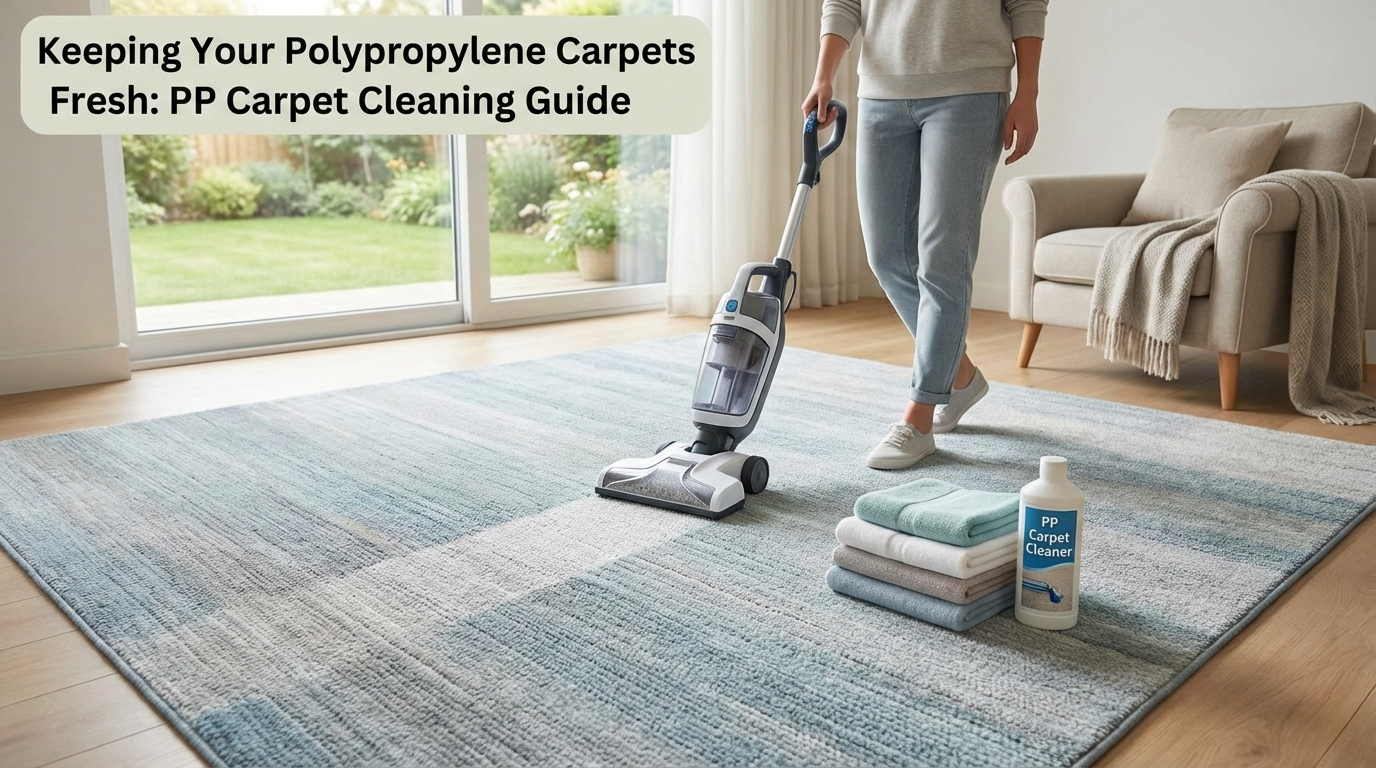
For areas that see regular use, vacuuming 2-3 times per week is recommended. Use a vacuum with both a rotating beater bar and strong suction, this combination removes surface dirt while agitating the pile to pull out embedded soil deeper in the carpet.
When you vacuum, use a crisscross pattern with overlapping strokes. This methodical approach ensures nothing is missed.
For new carpets, vacuum daily during the first week. This helps shed the loose fibers that naturally work their way to the surface, it’s simply part of how new carpet settles, not a sign of poor quality.
Beyond vacuuming, a few simple habits significantly reduce dirt and wear:
- Doormats at entrances trap soil before it reaches the carpet
- A no-shoes policy remarkably reduces both wear and dirt accumulation
- Area rugs in high-traffic zones distribute wear more evenly
- Rotating furniture prevents permanent crushing and indentation marks
- Managing humidity levels helps prevent moisture-related issues
These preventive steps often prove more effective than aggressive cleaning applied after problems develop.
Speed matters tremendously when addressing spills. The faster you act, the more successfully you’ll remove stains. This is especially true with polypropylene, where oil-based substances bond quickly to the fiber. Something easily removed in minutes can become stubborn within hours.
Blot, never scrub. Use a clean white cloth or paper towel to absorb excess liquid. Work from the outside edge toward the center to prevent spreading. Avoid aggressive scrubbing, which can push stains deeper into the fibers.
Mix a gentle cleaning solution. Combine 1 teaspoon mild detergent with 1 teaspoon white vinegar in 4.25 cups of warm water.
Gently apply the solution. Use a clean cloth with light pressure. Don’t saturate the area, while water doesn’t absorb into the fibers themselves, too much moisture can penetrate the backing.
Rinse thoroughly. Use clean water and a fresh cloth to remove all soap residue. This step matters more than people realize, leftover detergent actually attracts dirt, causing stains to reappear.
Dry completely. Blot with dry towels and allow the area to air dry. Opening windows or using fans accelerates the process.
Different Stains, Different Approaches
Oil-based stains require special attention. Sprinkle baking soda, cornstarch, or talcum powder over the stain and let it sit 1-2 hours to absorb the oil. Vacuum thoroughly, then treat any remaining stain with isopropyl alcohol or a degreaser. Avoid citrus-based solvents, they can damage polypropylene.
Pet stains respond well to enzyme cleaners. Apply liberally, allow 15-30 minutes for the enzymes to work, then extract with a wet/dry vacuum. For set-in stains, a combination of 6% hydrogen peroxide and household ammonia (4:1 ratio) works well when covered with plastic wrap.
Bleach cleaning is unique to 100% polypropylene, something not possible with most other fibers. Mix bleach and water in a 1:6 ratio, apply to the stain, gently work it in with a soft brush, then rinse thoroughly. This only works on pure PP, never on blends.
Always test any cleaning solution on a hidden area first, under furniture, in a closet, or along an edge, to prevent unexpected color loss or damage.
Professional Hot Water Extraction
Hot water extraction (sometimes called “steam cleaning”) represents the gold standard for deep cleaning. Schedule this every 12-18 month for normal traffic areas, or every 6-12 months for high-traffic zones.
The process involves pre-vacuuming, applying a warm pre-spray to suspend soil, allowing dwell time for the solution to work, then extracting with water heated to 160-165°F at 100-150 psi. An acid rinse follows, then rapid drying using air movers and fans.
Critical point: Never use true steam (above 212°F). Excessive heat can delaminate the backing, permanently distort the pile, and cause dye migration. The industry term “steam cleaning” actually refers to hot water extraction at safe temperatures.
DIY Outdoor Cleaning for Removable Rugs
For polypropylene area rugs that can be moved outside, DIY deep cleaning works well: vacuum thoroughly (both sides), pressure spray with clean water, apply a cleaning solution (2 tablespoons dish detergent with 4 liters water), scrub gently with a nylon brush in circular motions, rinse 2-3 times, then air dry on an elevated surface for optimal airflow. Only use this method on rugs you can completely dry to prevent mold.
Browning occurs when moisture causes soils or backing dyes to migrate upward, reappearing after cleaning. Prevention involves never over-wetting, using acid rinse solutions, applying encapsulation products, drying quickly with air movers, and making additional dry extraction passes. If browning occurs, treat with an acidic solution, allow 30 minutes dwell time, then rinse and extract with clean water only.
Polypropylene’s lower resilience makes it susceptible to permanent matting in high-traffic areas. Prevention requires daily vacuuming with a beater bar, monthly pile-lifting brushes, quarterly furniture rotation, area rugs in high-wear zones, and professional extraction every 18-24 months.
For furniture indentations, try the ice cube method,place ice cubes on indentations, let them melt, then gently brush fibers upward with a coin or fork. For broader areas, use a damp towel and iron on low heat.
- Vacuum regularly with a beater bar vacuum
- Blot stains immediately from outside toward center
- Use mild, pH-neutral detergents and warm water
- Test solutions on hidden areas first
- Dry carpets completely within 24 hours
- Use doormats and implement shoe-free policies
- Rotate furniture to prevent crushing
- Schedule professional cleaning annually
- Never scrub or rub stains aggressively
- Avoid over-wetting
- Don’t use excessive heat above 165°F
- Never use true steam (212°F+)
- Avoid citrus solvents
- Don’t use bleach on blended carpets
- Never walk on or store damp carpets
- Don’t neglect immediate spill response
With proper maintenance, polypropylene carpets typically last 5-10 years, with well-maintained examples reaching 12 years or beyond. Factors affecting longevity include traffic levels, maintenance frequency and quality, carpet density and construction, UV exposure, and professional cleaning adherence.
Comprehensive care can extend your carpet’s lifespan by 30-50% compared to neglected carpets, a meaningful difference in both appearance and cost-effectiveness.
Carpet maintenance might seem like a chore, but it’s actually an act of care. You’re preserving your investment, maintaining the comfort and beauty of your space, and extending the life of resources already consumed in manufacturing and installation.
Polypropylene carpets, with their practical durability and stain resistance, reward this kind of thoughtful stewardship with years of reliable performance and maintained appearance.
Polypropylene carpets offer genuine value when properly maintained. Their unique properties, moisture resistance, stain resistance, chemical tolerance, and UV stability, make them relatively easy to care for compared to natural fibers.
By implementing regular vacuuming, immediate spot treatment, periodic professional deep cleaning, and preventive measures, you’ll keep your PP carpets looking fresh. Understanding the material’s oleophilic nature, avoiding over-wetting and excessive heat, managing moisture appropriately, and responding quickly to spills, these principles, when consistently applied, transform carpet care from a reactive struggle into a manageable, satisfying routine.
Your polypropylene carpet has been engineered to serve you well. With thoughtful care, it will continue providing comfort and beauty for years to come.