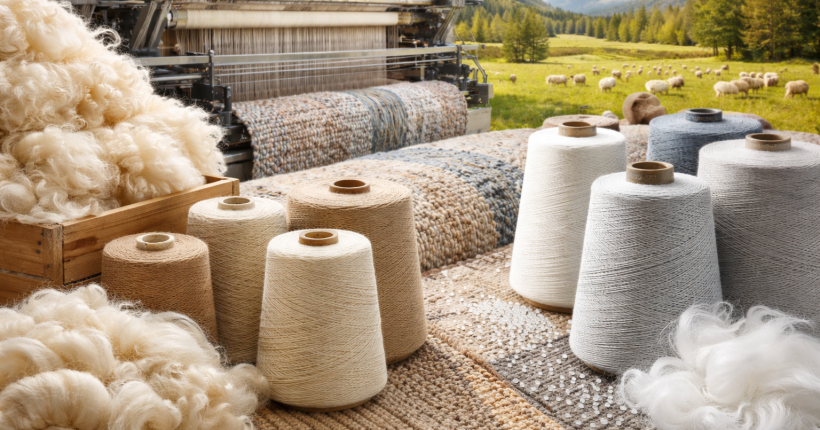
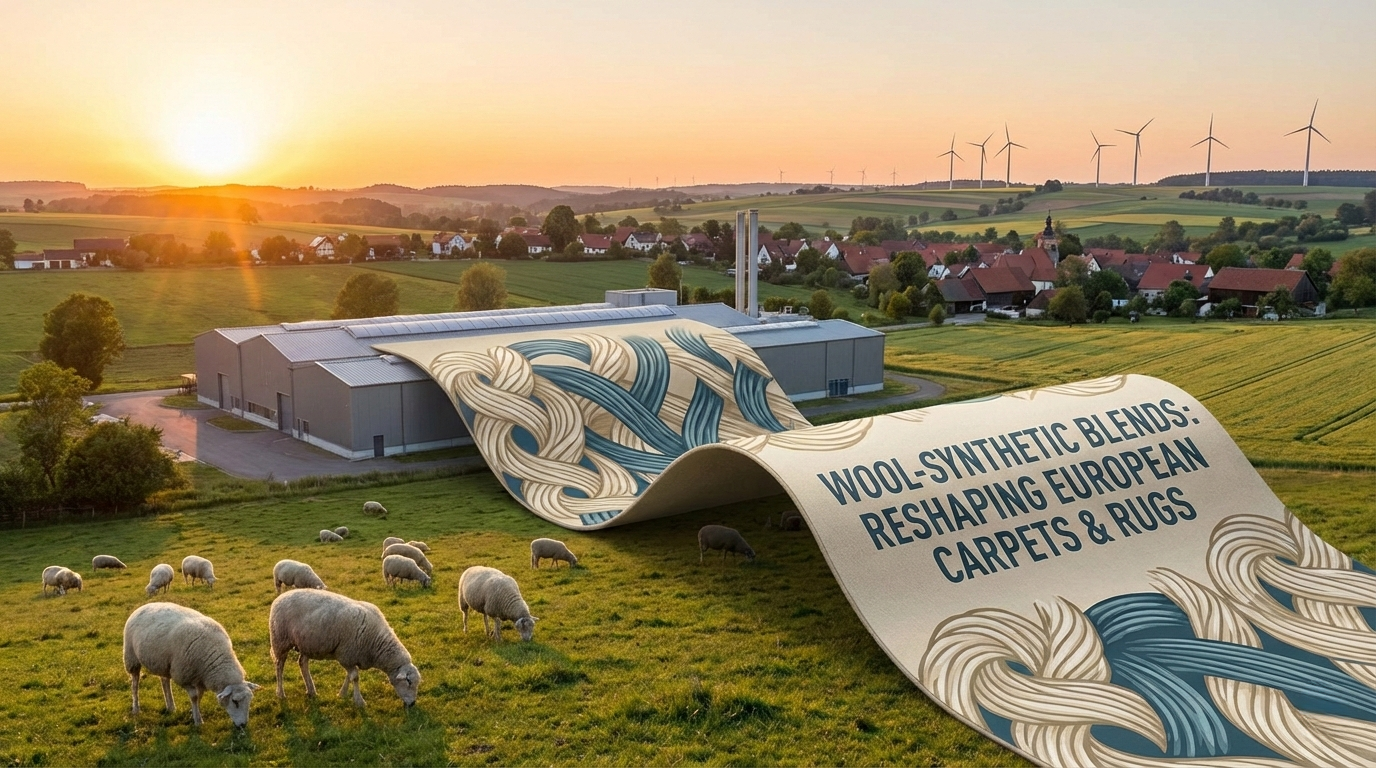
There’s something about stepping onto a well-crafted carpet, the familiar warmth, the gentle cushioning beneath your feet, the way it transforms a space into something more personal and lived-in. For generations, this experience has been synonymous with natural wool. Yet today, a quiet revolution is taking place across European homes and commercial spaces, one that challenges our traditional understanding of what truly matters in a carpet.
It’s a story not about choosing between wool or synthetic fibers, but about discovering what happens when they’re thoughtfully brought together.
The European Market’s Shift Toward Sustainability
The landscape of European carpet consumption has been undergoing a subtle but significant transformation. No longer is the choice purely between luxury wool carpets and practical synthetic alternatives. Instead, European consumers, increasingly conscious of environmental impact and long-term value, are gravitating toward solutions that offer the best of both worlds.
The numbers tell part of this story. The European carpet and rug market is projected to grow at a compound annual growth rate of 6.1% through 2030, with an estimated market value reaching over €4 billion. What’s driving this growth isn’t simply preference for traditional materials anymore. Rather, it’s a growing recognition that sustainability, durability, and aesthetic appeal need not be mutually exclusive.
Today’s European consumer understands something fundamental: true quality isn’t always found in a single, pure material. It’s often discovered in the intelligent combination of complementary fibers.
Why Natural Wool Alone Isn’t the Complete Answer
Wool has long been revered for its natural properties, its insulating warmth, its resilience, its gentle feel against the skin. These qualities remain undeniably valuable, particularly in regions like the UK, Ireland, Norway, and Finland, where wool carpets have maintained a cultural significance.
However, wool faces its own set of challenges. The rising cost of natural wool has placed pressure on manufacturers and, consequently, on consumers’ budgets. There’s also the matter of practicality: pure wool carpets can be vulnerable to shrinkage, shedding, and they may trigger allergies in sensitive individuals. Additionally, maintaining wool carpets often demands more careful attention than many modern households can realistically provide.
For commercial applications, hotels, healthcare facilities, high-traffic office spaces, wool alone sometimes falls short of the demands placed upon it. Stains are more easily absorbed, moisture resistance is limited, and the investment can be substantial.
These aren’t failings of wool itself. Rather, they’re simply reminders that no single material exists to perfectly serve every situation.
The Innovation: Engineered Synthetic Blends with Wool Aesthetics
This is where innovation enters the conversation. Over the past decade, manufacturers like Sparetex have developed a remarkable category of synthetic fibers engineered specifically to replicate the aesthetic and tactile qualities of natural wool, while incorporating the practical advantages of modern synthetics.
Consider polypropylene-based yarns that have been specifically engineered to achieve a wool-like appearance and hand-feel. These fibers combine:
- The visual richness and depth of wool’s natural aesthetic
- Superior stain and moisture resistance that makes daily living less demanding
- Exceptional durability suited to homes with children, pets, or high-traffic areas
- Hypoallergenic properties for those with sensitivities
- Environmental benefits through improved recyclability and lower overall production impact compared to certain synthetic alternatives.
What makes this particularly significant for European consumers is that these engineered blends don’t feel like compromises. They feel like thoughtful solutions.
Sustainability Meets Practicality
The European Union’s regulatory environment has become increasingly focused on sustainability. New directives set strict guidelines for carpet production, labeling, and disposal, effectively rewarding manufacturers who prioritize environmentally conscious practices. This regulatory landscape has created an incentive structure that favors innovation over tradition.
For consumers across the European market, this means something becomes possible: selecting a carpet that aligns with their values and their practical needs and their budget.
Real-World Applications Across Europe
Different European markets have begun embracing wool-synthetic blends in distinct ways:
Nordic countries (which have maintained strong wool traditions) are increasingly adopting blended solutions in commercial spaces where natural wool’s limitations create operational challenges, while still preserving pure wool in residential settings where the aesthetic and sensory experience justifies the investment.
Central and Western Europe has shown particular enthusiasm for engineered wool-look synthetics in residential applications, where families are seeking the comfort and beauty of wool-inspired carpets without the maintenance demands or allergen concerns.
Healthcare and hospitality sectors across the continent have discovered that wool-synthetic blends offer a particularly valuable combination: they deliver the visual prestige and warmth that guests expect, combined with the practical resilience that institutional environments demand.
The Market Opportunity (The Why)
Over the past 18 months, we’ve observed a fundamental transformation in the global carpet industry that directly impacts premium wool manufacturers like Best Wool:
- Wool-Blend Carpets Are Growing 2-3x Faster Than Pure-Wool Carpets
- Pure wool carpets: 4.5-5.8% CAGR (2024-2033)
- Wool-blend carpets: 10.3-11.3% CAGR (2024-2033)
- Mid-range blend segment: Fastest-growing tier globally
Leading carpet manufacturers (Shaw Industries, Mohawk, Beaulieu, Waldorf) are already moving aggressively into premium wool-blend positions. This isn’t a race for commodity products, it’s a strategic expansion into untapped market segments that pure-wool specialists have undeserved.
The Gap: 40% of the global residential and commercial carpet market is unable or unwilling to afford premium pure wool. Simultaneously, 70% of premium buyers now express interest in wool-blend options if they offer the heritage aesthetic of wool WITH practical durability benefits.
The story of wool-synthetic blends in the European carpet market is still being written. But the early chapters suggest something encouraging: that innovation doesn’t require abandoning values. Instead, it can mean finding new ways to honor the qualities we’ve always valued in carpets—warmth, beauty, authenticity, durability—while addressing the practical and environmental concerns of contemporary life.
The carpets beneath European feet are changing. And in many cases, they’re becoming not just more practical, but genuinely better at delivering the comfort, style, and peace of mind that makes a house feel like home.