Why Carpets and Allergies Are Linked
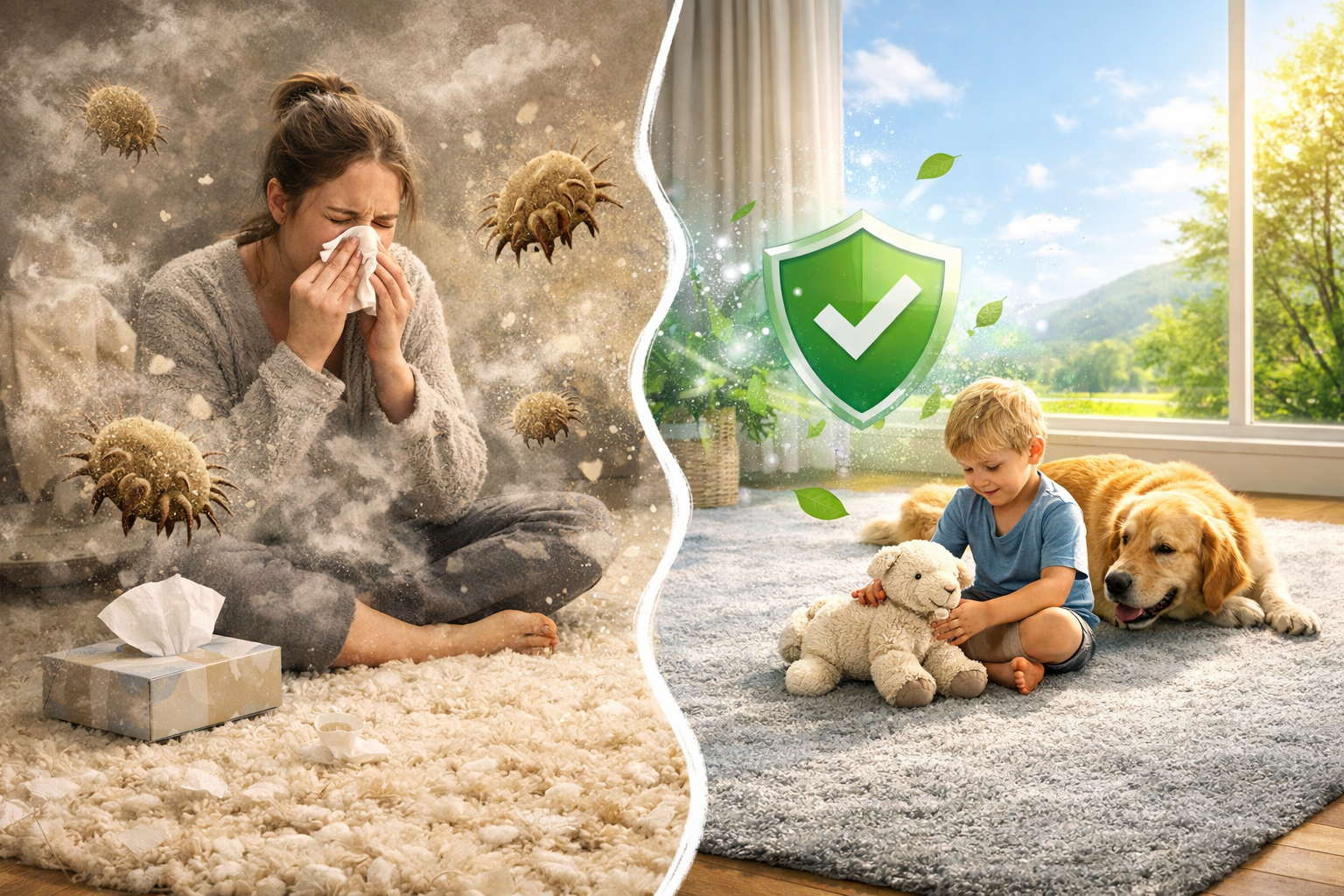
Indoor allergies are usually triggered less by the carpet itself and more by what settles into it over time, dust, pet dander, pollen, and the waste from dust mites.
These particles become a problem when they stay trapped in the pile, are stirred into the air with every step, and find the right mix of warmth and humidity to let dust mites and microbes thrive.
A carpet is called “hypoallergenic” when its fiber and construction make it harder for these allergens to build up or survive, and easier for cleaning to remove them efficiently.
Wool Carpets: Natural, Beautiful – But Not Always Easy for Sensitive Users
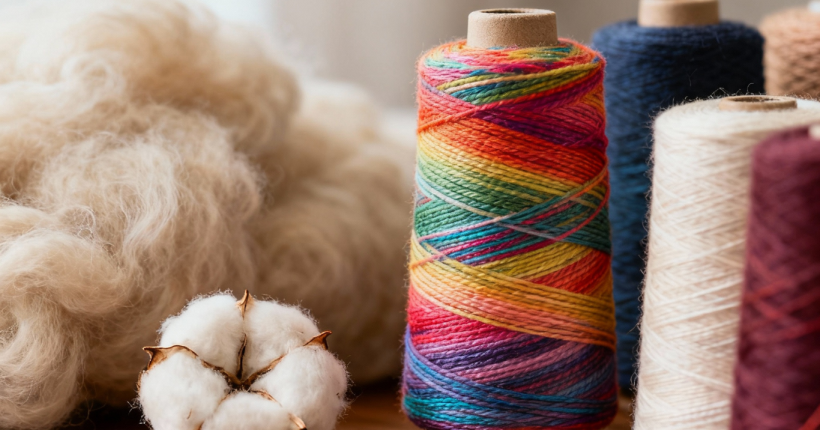
Wool has long been valued for its softness, thermal comfort, and luxurious look, and many manufacturers describe wool carpets as “healthy” because the fibers can trap dust and help keep it out of the air.
Wool also regulates humidity, absorbing a significant amount of moisture from the surrounding air, which can be helpful in some climates but also changes how the carpet behaves in damp conditions.
For allergy‑sensitive people, several practical issues tend to arise with wool‑yarn carpets:
- Moisture absorption and dust mites
Wool can take up to 30–40% of its weight in moisture, and if indoor humidity stays high, this creates a friendlier environment for dust mites and some microbes unless cleaning and dehumidification are managed very carefully.
Where humidity control or regular deep cleaning is inconsistent, the same “breathable” property that makes wool comfortable may also mean more allergen reservoirs in the pile and backing over time. - Fiber structure and allergen holding
The scaly, textured surface of natural wool fibers is excellent at catching fine particles like dust, pollen, and pet dander, which is helpful only if vacuuming is frequent enough to remove them before they accumulate.
In busy households where cleaning is irregular, this capacity to hold particles can translate into more allergen build‑up inside the carpet compared with some smooth synthetic fibers. - Perception of “animal‑origin” materials
Some people are uncomfortable with any animal‑derived textile when managing asthma or eczema, and may report irritation from prolonged skin contact with wool, even if the fiber itself is described as non‑allergenic in many studies.
In practice, these personal sensitivities mean that wool yarn carpets are sometimes experienced as “itchy,” “musty,” or “heavy” for households trying to keep a very low‑allergen environment.
So while wool has many technical and health arguments in its favor, its combination of moisture reactivity and deep allergen‑holding capacity makes its real‑world performance very dependent on climate, cleaning habits, and individual sensitivity.
Olefin: The Hypoallergenic Logic Behind Woolino
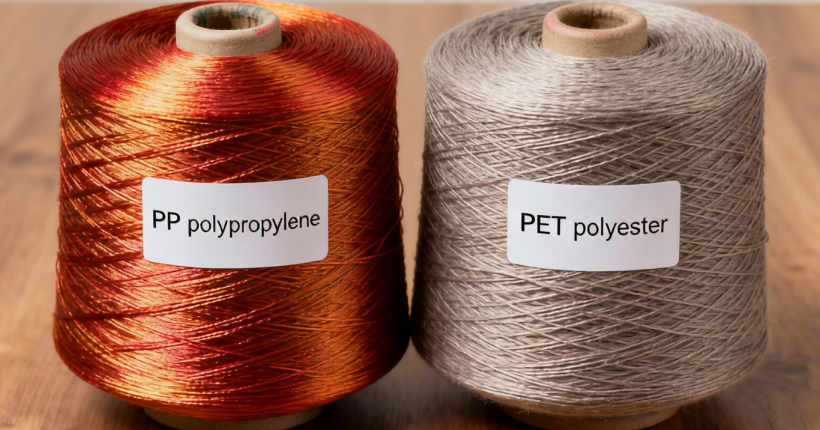
By contrast, many modern hypoallergenic carpets use synthetic fibers such as Olefin, polyester, or nylon specifically because they repel moisture and resist mold growth and dust‑mite colonization.
Olefin carpets in particular are repeatedly highlighted as suitable for allergy‑prone homes, thanks to their low moisture absorption, resistance to mildew, and smoother, less porous fiber surface.
Olefin fibers:
- Absorb virtually no water, which makes them far less hospitable to dust mites, mold, and bacteria.
- Are inherently resistant to many household chemicals and stains, supporting more thorough cleaning without damaging the pile.
- Are fully synthetic and do not contain animal proteins like lanolin, so they avoid that entire category of potential sensitivities.
These are the material foundations on which Woolino is built.
Woolino is an engineered, olefin‑based yarn created by Sparetex to reproduce the softness, warmth, and visual depth of natural wool without wool’s typical drawbacks such as shrinkage, shedding, or allergen content.
In practice, that means Woolino is designed to look and feel like a high‑end wool yarn, while behaving like a modern, low‑allergen synthetic fiber inside carpets and rugs.
From internal product documentation, Woolino is described as:
- A wool‑like olefin yarn that mimics wool’s cozy appearance and hand‑feel.
- Developed specifically for tufted and handloom carpet constructions, cutting cleanly and running smoothly on machines, with negligible shredding after shearing.
- Providing enhanced thermal comfort in a lightweight composition, warm underfoot without the heaviness of dense natural fibers.
Most importantly for allergies, it is explicitly engineered to deliver this wool‑like experience without the allergen‑related limitations of conventional wool.
Why Woolino Carpets Behave as Hypoallergenic
When Woolino is tufted or woven into carpets, the underlying Olefin chemistry and fiber engineering shape how that carpet interacts with allergens in everyday use.
Several factors contribute to its hypoallergenic character:
- Near‑zero moisture uptake
Olefin’s non‑absorbent structure does not hold ambient humidity the way wool does, which helps discourage dust‑mite growth and mold in the pile and backing under normal indoor conditions.
In humid climates, this low moisture affinity becomes a practical advantage for allergy‑prone families who cannot tightly control indoor humidity at all times. - Smooth, solution‑dyed fibers
Woolino fibers are solution‑dyed, which means color is built into the polymer rather than applied as a surface dye, reducing the need for additional chemical finishes on the fiber itself.[1]
The smoother synthetic surface holds fewer microscopic particles than rougher natural scales, making routine vacuuming more effective at removing dust, dander, and pollen before they become a persistent trigger. - No animal‑derived proteins
Being a pure olefin yarn, Woolino contains no lanolin or other animal proteins, which means there is no direct exposure to those components for people who prefer to avoid animal‑origin materials for skin or ethical reasons. - Compatibility with thorough cleaning
Woolino carpets tolerate standard modern maintenance methods, including professional hot‑water extraction at controlled temperatures, without felting, shrinking, or fiber damage.
Because Olefin is chemically resistant, stronger, but still carpet‑safe, detergents and disinfectants can be used when needed, supporting a deeper reduction of biological allergens in homes where asthma or dust‑mite sensitivity is a constant concern.
Together, these characteristics position Woolino carpets as naturally aligned with what independent flooring guides describe as “hypoallergenic carpet”: low moisture uptake, smooth fibers, and easy, effective cleaning.
How This Difference Feels in Daily Life
In a home with allergies or asthma, small differences in material behavior are noticed over months rather than days.
With wool‑yarn carpets, the experience over time often includes:
- A sense that carpets feel “heavier” or “damp” in certain seasons unless humidity is actively controlled.
- The need for more cautious cleaning routines, avoiding aggressive chemicals or over‑wetting to prevent shrinkage or damage.
- More dependency on disciplined vacuuming and dehumidification to keep dust‑mite populations and musty odors under control.
With Woolino‑based carpets, the long‑term feel tends to be different:
- Floors feel warm and soft underfoot without the same sensitivity to seasonal humidity swings, thanks to the yarn’s low moisture absorption.
- Cleaning can be more practical and less anxious, spills, pet accidents, or heavy traffic can be treated assertively without fear of felting or fiber distortion.
- For many users, especially in busy, allergy‑aware households, the combination of low allergen retention and easy maintenance brings an everyday sense of “lighter air” and fewer flare‑ups, provided basic cleaning habits (HEPA vacuuming, periodic deep cleaning) are in place.
A Gentle Way to Choose: Who Benefits Most from Woolino?
Woolino does not exist to discredit wool as a fiber; many studies and manufacturers still highlight wool’s own hypoallergenic arguments when carefully maintained.
Instead, Woolino is best understood as a response to a very specific need: the desire for the visual richness and cozy feel of wool carpets, in homes where minimizing allergen risk and simplifying care are top priorities.
It tends to be especially suitable when:
- Someone in the household lives with asthma, dust‑mite sensitivity, or recurring rhinitis and wants to reduce biological allergen reservoirs in soft furnishings.
- Climate or building design makes humidity control imperfect, raising the risk that moisture‑absorbing textiles become long‑term allergen hosts.
- There is a preference to avoid animal‑origin materials without giving up the classic wool look in carpets and rugs.
In those situations, carpets made from Woolino offer a reassuring middle ground: the aesthetic and comfort language of wool, supported by the naturally hypoallergenic behavior of modern olefin yarns.